Good morning, dear reader and pepper buyer! How are you?
Today we’re going to talk about quality!
In recent days, several companies and rural producers have contacted us wanting to know more about what the main quality standards are and how to obtain them. So let’s get to it!
Who defines the quality standards?
Normative Instruction 10 of 2006, issued by MAPA (Ministry of Agriculture, Livestock and Supply), regulates the quality control of black pepper intended for commercialization and import. This regulation also addresses batch sampling, complementary analysis procedures, and the roadmap to be followed for the complete classification of your product intended for import or export.
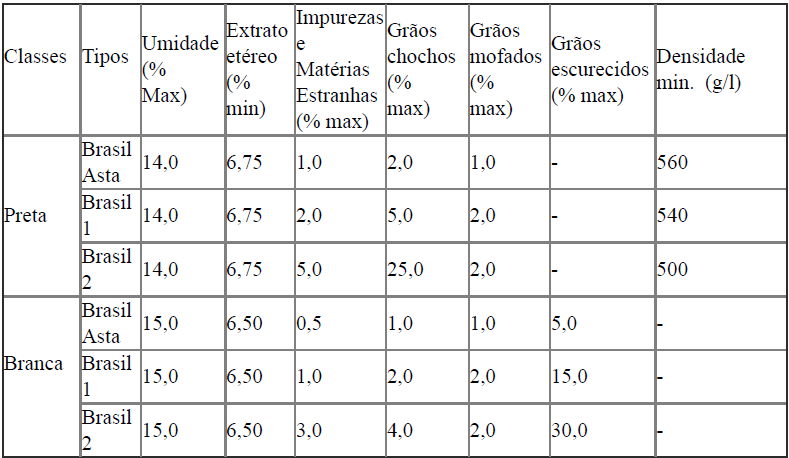
The Normative Instruction defines two main classes of pepper: black pepper and white pepper. In addition to the classes, it also defines three main types: ASTA, B1, and B2.
What are the main patterns analyzed?
The main parameters analyzed and their definitions are:
- Density : This corresponds to the ratio of a product’s mass to the volume it occupies. Its unit of measurement is g/L.
- Moisture: Percentage of water found in the product sample.
- Impurities: Debris from the product itself, such as fragments of bunches, leaves, branches, bark, etc.
- Foreign matter: This includes stones, sand, seeds from other crops, metal, or any product that does not originate from pepper.
- Moldy grains: Grains contaminated by mold or mildew, visible to the naked eye. These are the light-colored grains that usually appear when the pepper gets rained on or takes too long to dry in the yard.
- Empty grains: These are grains with very poor maturation. They have a much lower density than normal grains. This is usually the result of peppers being harvested too green.
- Darkened grains: Applies only to white peppercorns. Refers to grains with a darkened color.
- Substances harmful to health: These include mycotoxins, pesticide residues, and other contaminants that are permitted under the legislation of the country of sale.
- Ether extract: Percentage of essential oils and lipids. Generally required only by pepper buyers for grinding and extracting vegetable oil.
What are the limits to be obeyed?
The characteristics described above include some maximum or minimum limits used to define the type of pepper (ASTA, B1, or B2). The indices are described in the table below.
Generally, buyers of chili peppers already have the infrastructure to perform this type of analysis before purchasing the product. When they lack the necessary equipment, they partner with a laboratory.
Despite the large number of analyses, most can be replicated on the farm or in the industry and used as a benchmark for laboratory analyses and as a competitive advantage at the time of sale.
How to obtain samples for analysis?
The first step in obtaining quality standards is to separate a representative sample from the batch. For the analysis to be representative, it is necessary to follow the collection procedures below:
- Observe the general conditions of the product batch, such as:
- Any strange odor of any kind that is inappropriate for the product;
- Presence of live or dead insects when intended for human consumption;
- Percentage of moldy grains greater than 2% and poor product preservation.
When any of these conditions are observed, the pepper is considered to be UNQUALIFIED and its sale is prohibited, according to the Normative Instruction.
- Sampling of bagged or bulk pepper should be done by drilling or testing. Bags or sampling points are chosen randomly. The number of sampling points varies according to the amount of product to be sampled, as per the table below:
Would you like to receive this and other news on your cell phone?
Register by clicking here :
| Lot size in bags | Minimum number of bags to be sampled. |
| 2 to 25 | 2 |
| 26 to 50 | 3 |
| 51 to 90 | 5 |
| 91 to 150 | 8 |
| 151 to 280 | 13 |
| 281 to 500 | 20 |
| 501 to 1200 | 32 |
| 1201 to 3200 | 50 |
| 3201 to 10000 | 80 |
| 10001 to 35000 | 125 |
| 35001 to 150000 | 200 |
| 150001 to 500000 | 315 |
| 500001 or more | 500 |
- The samples taken according to the previous distribution must be homogenized and packaged in at least three samples, each weighing at least 1 kg, properly identified, sealed, and authenticated.
- One sample will be given to the interested party, and two will remain with the classifier in charge.
How do I estimate the parameters on my farm?
While some parameters require more detailed instrumentation and processes, others can be obtained more easily, even if somewhat less precisely than in the laboratory. These include:
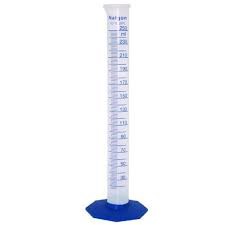
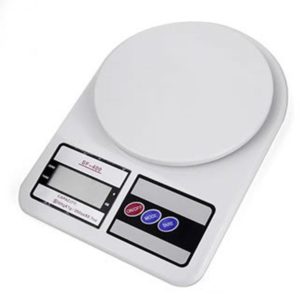
Density: Can be estimated using a graduated cylinder and a precision balance (images below).
Simply fill a graduated cylinder with a volume of 1 liter, allowing the grains to fall freely until the height of the grains coincides with the 1-liter mark on the cylinder.
It is important to emphasize that NO compaction or movement of the material should be done with the intention of “fitting more” pepper.
Next, the mass of pepper in the test tube should be weighed. The value obtained on the scale (in grams) corresponds to the density of the pepper in g/L.
Moisture: In Brazil, the official moisture determination rule adopted by MAPA (Ministry of Agriculture, Livestock and Supply) is the same as that defined by the Rule for Seed Analysis – RAS (Brazil, 1992). The standard method involves the use of ovens. However, this method is very time-consuming and requires a specific control structure and equipment.
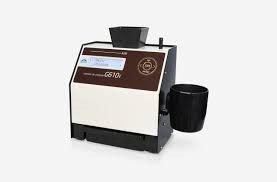
One way to make measuring humidity easier is to use electronic equipment similar to the one shown in the figure below. The most common brand on the market is GEHAKA.
It is important to note that it is necessary to confirm at the time of purchase whether the equipment is configured to work with black pepper, as some models may not have this option.
Another important point to remember is that this device requires constant calibration. Therefore, from time to time it is necessary to contact the manufacturer and request that a qualified technician perform the calibration.
Impurities and foreign matter : For this analysis, a 250 g sample weighed on a digital scale is used.
In the sample, all impurities and foreign matter visible to the naked eye are removed.
All removed material must be weighed.
The percentage result for impurities and foreign matter is obtained by dividing the mass of particles removed from the sample by the total mass, converting the ratio to a percentage.
Moldy grains : For this analysis, a 250 g sample weighed on a digital scale is used.
In the sample, all grains with a moldy appearance (with a whitish color) are removed.
The removed material must be weighed.
The percentage of moldy grains is obtained by dividing the mass of moldy grains by the total sample mass, converting the ratio to a percentage.

Tiago Tozi
Agricultural and Environmental Engineering – UFV
PepperBlog Writer
Do you have any questions, comments, or suggestions? We’d be happy to talk to you! Leave a comment below.