Hello fellow reader, how are you?
Today we’re going to talk about the National Policy for Incentivizing the Production of High-Quality Black Pepper!
The bill, currently in its final approval phase, promises to bring significant changes to the black pepper supply chain in Brazil by providing support, innovation, technology, and improved market access.
Check it out below!
The Black Pepper Market
Anyone who was in the market about 4 years ago witnessed the black pepper craze, when the price per kilo of the spice reached around R$ 30.00/Kg paid to the producer.
The high profitability at the time led many new farmers to venture into the crop, generating a substantial increase in production and planted area.
Today, the situation is quite different. Market dynamics cause prices to fluctuate over time, and a downward movement was expected after a rise of more than 500% in quotations, which in fact happened between 2005 and 2015.
Everyone involved in the black pepper market is witnessing a progressive drop in pepper prices, especially in the domestic market.
Prices are already approaching the approximate value of R$ 6.00 paid to the producer, a drop of about 80% in less than 3 years.
You must be wondering:
“Ah, but what should we do to suffer less from price fluctuations?” or,
“How can I find better business opportunities during market downturns?”
Brazil and Black Pepper
To answer these questions, we need to analyze what Brazil has been doing to ensure its position as one of the main players in the international black pepper market in the coming years.
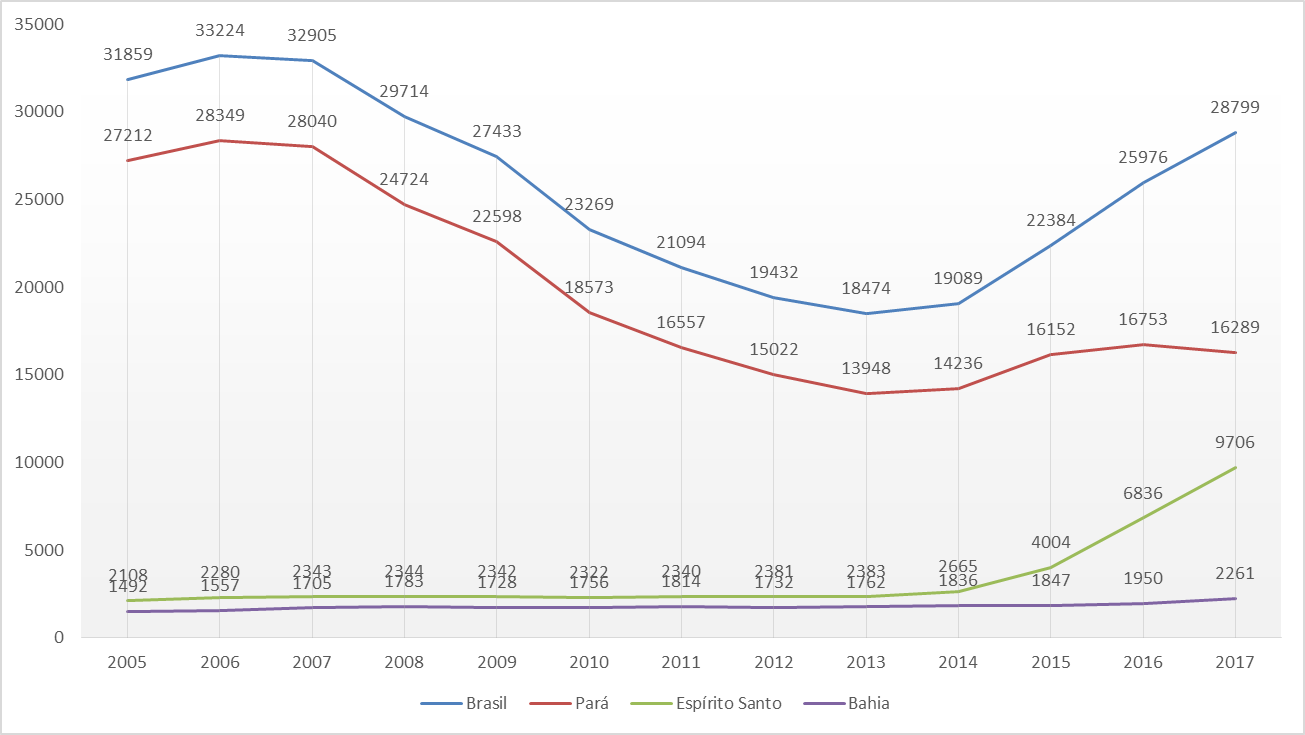
Today, Brazil is the fourth largest producer of black pepper in the world. With the pepper boom a few years ago, some regions of Brazil have revealed great potential for the expansion of pepper cultivation, such as northern Espírito Santo and southern Bahia.
Both regions are gaining increasing prominence in national production, even approaching the level of Pará, a state traditionally the leader in Brazilian black pepper production.
Chart 01 – Evolution of Brazilian Black Pepper Production (in tons) from 2005 to 2017
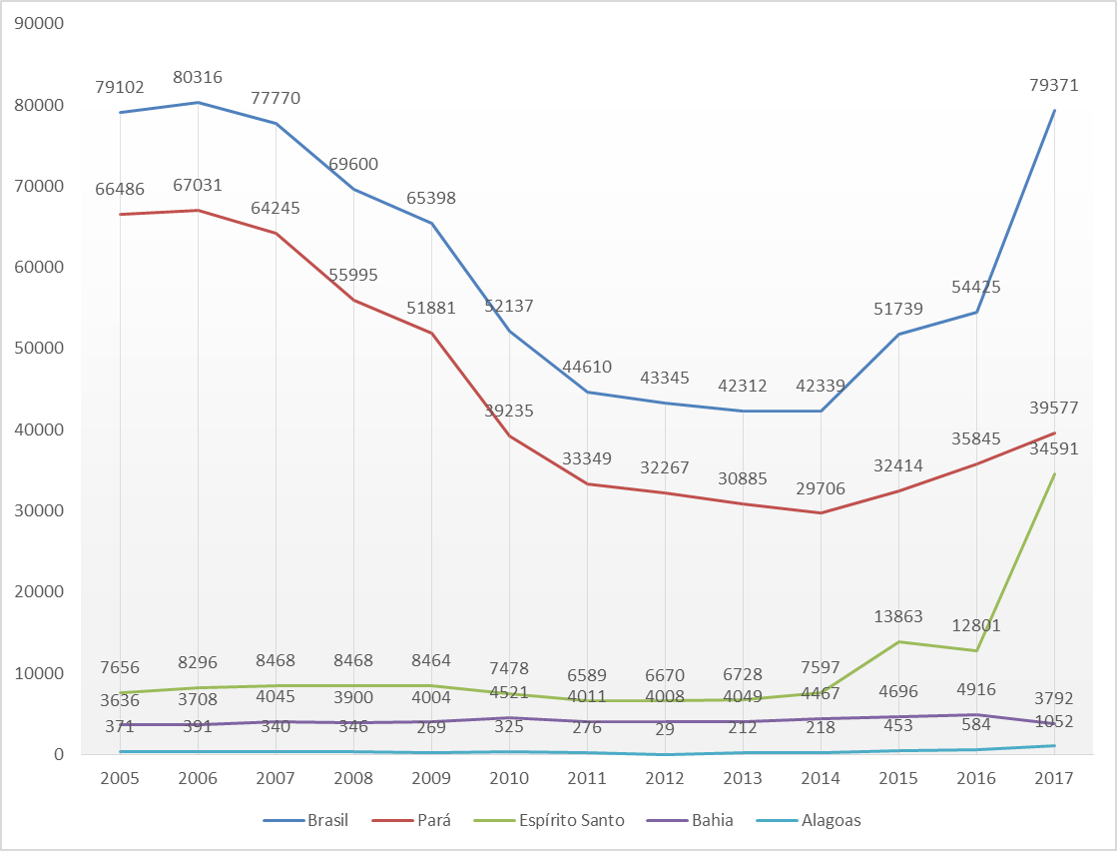
Source: IBGE – Municipal Agricultural Production.
Unfortunately, this scenario isn’t all roses.
With the black pepper supply chain lacking structure in terms of instruments that guarantee coordination and cooperation between agents, some distortions have been occurring and damaging the image of Brazilian black pepper.
During the price boom a few years ago, the main concern was producing and selling as much pepper as possible and taking advantage of the exorbitant prices being paid.
During this period, the cultivation of black pepper began to intensify, and a considerable increase in the planted area can be observed in the main producing states.
Graph 02 – Evolution of the Planted Area or Area Intended for Harvesting (in hectares) of Black Pepper from 2005 to 2017
Source: IBGE – Municipal Agricultural Production
The problem is that the entry of new producers has not kept pace with the advancement of good agricultural practices for the product.
In many cases, quality was considered a secondary element, and there was a growing number of instances where serious deviations in product quality were detected in both export and domestic market shipments.
Adulteration, microbiological contamination, quality below international standards, and the presence of toxic substances were some of the problems encountered by Brazilian black pepper during this period.
Gradually, several exported containers began to be returned due to the problems mentioned above or because they did not meet the expectations and requirements of the buyers.
The result was enormous losses for rural producers and other agents involved in the black pepper supply chain, as well as a negative impact on the image of Brazilian pepper in the international market.
Would you like to receive this and other news on your cell phone? Sign up using the button below:
The best news in the palm of your hand.
A Solution in Sight
Since 2016, a piece of news has brought renewed hope to everyone who works with black pepper.
In view of this entire scenario of sector competitiveness, Federal Deputy Evair Vieira de Melo (PV-ES) proposed BILL NO. 4,728-A, OF 2016 , which provides for the establishment of the National Policy for Incentivizing the Production of Quality Black Pepper.
Currently, the Bill is awaiting approval from the Committee on Constitution, Justice and Citizenship (CCJC), with Deputy Félix Mendonça Júnior (PDT-BA) designated as rapporteur.
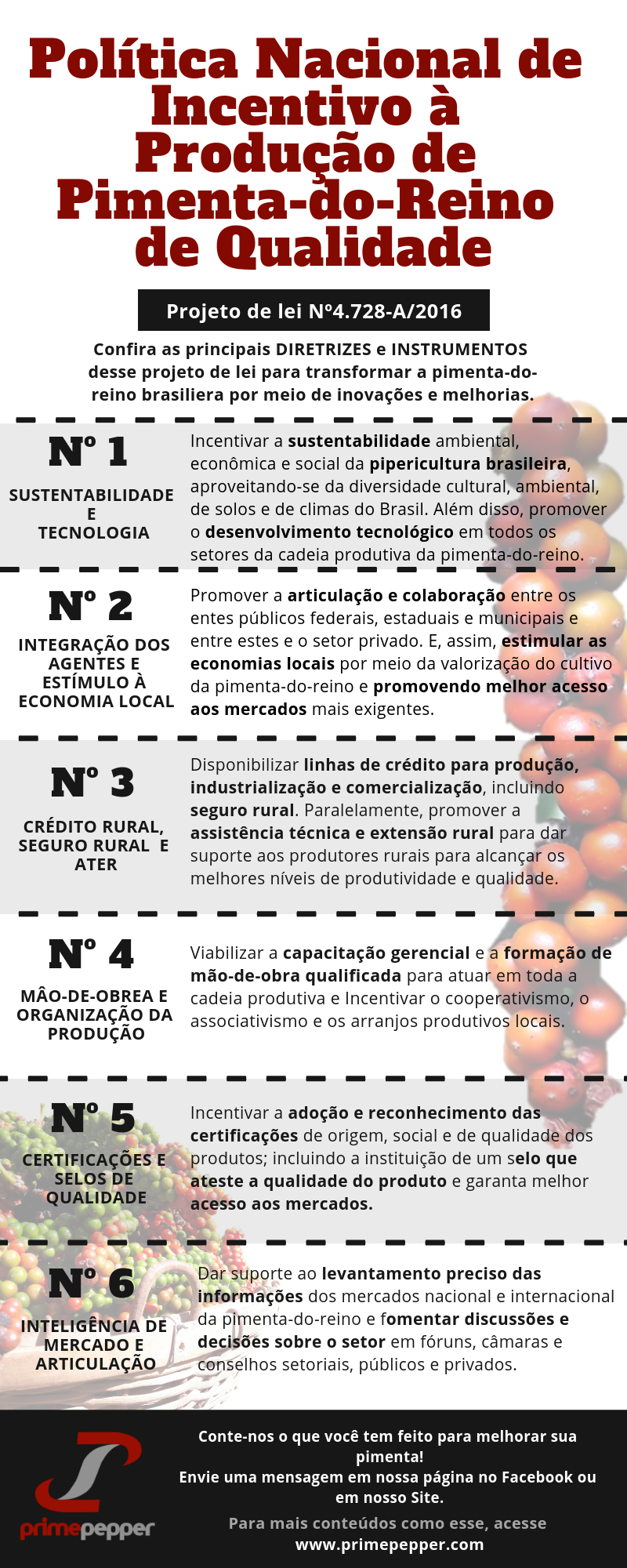
The project also highlights the fact that rural producers will have priority access to rural credit lines if they:
- Small and medium-sized family businesses;
- Already trained to produce high-quality black pepper;
- Organized into associations, cooperatives, and local production arrangements that add value to black pepper in some way, including certifications in the economic, social, and environmental areas.
To follow the current status of the bill’s progress, access the Chamber of Deputies’ page here .